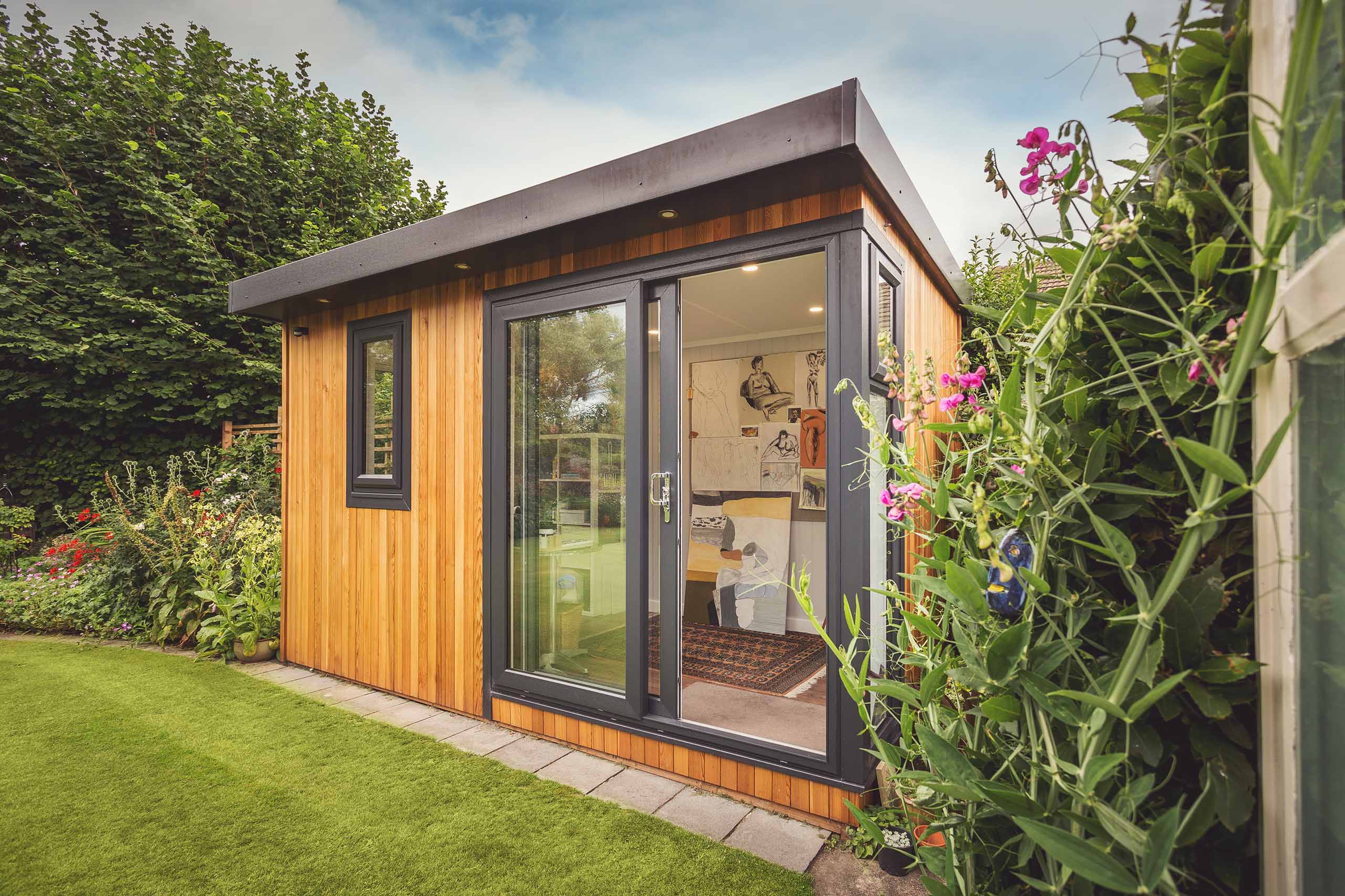
Choosing the best garden room design for your home means looking beyond pretty pictures on Instagram. It’s about finding the right balance between size, purpose, materials, layout and how the building will sit in your garden – not just for today, but for the way you’ll live in years to come.
At Country Garden Rooms, we’ve designed and installed garden rooms for home offices, gyms, therapy practices, annexes and relaxation spaces across Somerset and the South West. Drawing on that experience, we know the main consdierations you need to think about so you can design a garden room that feels like a natural extension of your home and lifestyle.
What Will You Use Your Garden Room For?
The best place to start isn’t cladding or colour, it’s purpose. Ask yourself: what do I really want this space to do for me?
For some people, a garden room is all about creating a calm, focused home office that’s separate from the hustle and bustle of the house. For others, it’s a dedicated gym where weights, bikes and equipment can live permanently. You might be dreaming of a creative studio for art or music, a therapy or treatment room where clients feel welcome, a teen den or games room where children can hang out, or an annexe space for visiting relatives. Many of our clients want a flexible “extra room” that can work as a lounge, occasional guest space AND cosy retreat all in one.
Once you have clarity on your main use, a lot of other choices become easier. A gym needs more wall space and robust flooring; a therapy room needs privacy and warmth; a multi-use space may benefit from a slightly larger footprint and clever storage so it can evolve over time. You don’t have to map every detail at this stage however, understanding your priorities will shape a design that actually works in daily life, rather than just looking beautiful on a plan.
What Size Garden Room Should I Choose?
Size is one of the biggest practical and visual decisions. Go too small and you can quickly outgrow the space. Go too large and the building might dominate the garden or complicate planning.
A good starting point is to think realistically about how you’ll use the room day to day. For example, if you’re planning a home office, picture where the desk, whether you need room for a second workstation, storage or a comfy chair. For a gym, imagine where the treadmill, bike, weights rack and mat area would go. This mental “walk-through” is something we often do with clients and it quickly reveals how much floor space is truly needed.
It’s equally important to consider how the building will feel in your garden as a whole. A garden room should sit comfortably within the space, not swallow it. When we survey a site, we’ll look at views from the house, existing planting, boundaries and sun direction to help you choose proportions that enhance rather than overwhelm your outdoor space.
Size and Planning Considerations
Size also links closely to planning permission. Most garden rooms can be built under permitted development, which means you don’t need to apply for full planning consent. However, this comes with conditions around overall height, distance from boundaries and how much of your garden the building occupies. Read more on our Garden Rooms and Planning Permission blog.
When we’re designing a garden room, we’ll talk you through the implications of different sizes so you can decide whether to keep things comfortably within permitted development limits, or whether a larger building with a planning application is more appropriate for your needs.
How Do I Choose the Right Cladding for My Garden Room?
Cladding is usually the first thing people notice and it has a big impact on both the overall exterior appearance and the upkeep of your garden room. At Country Garden Rooms we work with three cladding options: Redwood, Marley Board and Cedar. All look attractive, but each brings something different in terms of style, cost and maintenance.
Redwood offers a warm, natural timber finish that suits both traditional and contemporary gardens. It’s a slow-grown Scandinavian softwood with a visually pleasing grain and a classic “cabin” feel. For many customers, redwood represents the ideal balance between cost and character. It does require periodic maintenance, usually re-staining or treatment, to keep it looking its best, but in return you get a very natural, tactile finish.
Marley Board is a fibre-cement composite and is the go-to option if low maintenance is at the top of your list. It won’t rot, warp or crack, and it doesn’t need painting or staining. The boards have a subtle woodgrain effect and are available in a range of colours, so you can choose a softer tone to blend into the garden or a bolder one for a modern statement. For busy households, rented properties or locations where access is limited, Marley Board often makes a lot of sense.
Cedar is the premium choice, both visually and in terms of investment. Western Red Cedar has a beautiful, almost knot-free appearance with rich natural tones that gradually weather to an elegant silver-grey if left untreated. It creates a very high-end, architectural look and works particularly well where the garden room is a strong focal point: for example, at the end of a long garden vista, or directly facing the main living space. Cedar is more expensive than redwood or Marley Board, so it’s worth deciding how important that “wow factor” is within the overall project budget.
Consider Hybrid Cladding
You don’t have to commit to just one material. A very popular approach is to use cedar or redwood on the front elevation or the side you see and interact with most and then combine this with Marley Board on the less visible sides and rear. This hybrid combination allows you to enjoy a beautiful timber frontage while keeping long-term maintenance and cost under control. It’s a good example of how thoughtful design can serve both aesthetics and practicality at once.
Planning the Internal Layout of Your Garden Room?
Once you’ve settled on size and cladding, it’s time to think about the internal layout. The three main questions here are: do you want a garden room consisting of one open space, do you need separate zones and do you require any additional rooms such as a bathroom or storage area?
Many garden offices and studios work brilliantly as a single, open room. This gives you maximum flexibility to move furniture as your needs change. However, for some uses, a more structured layout can be a big advantage. A therapist might want a simple, calm treatment room plus a small storage cupboard for linen and products. A family planning a multi-use space might want a main seating area and a discrete section that can hide a sofa bed and wardrobe for occasional guests. Someone building an annexe or semi-independent space might need a bathroom and perhaps even a small kitchenette.
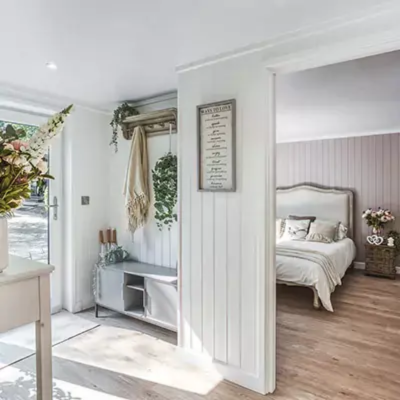
All of these options are possible, and we find that seeing them in 3D makes a huge difference. As part of our design process, we provide a 3D design service that allows you to visualise where doors, windows, furniture and internal partitions will sit. You can see how the room flows, how much circulation space you have and where storage would be most useful. This stage often leads to small but important refinements; moving a door to give more wall space, adding a shallow cupboard or, adjusting window positions to frame views or avoid glare on a screen.
How Will My Garden Room Sit Within the Garden?
A well-designed garden room feels as if it belongs in the garden, not as if it’s been dropped there as an afterthought. Thinking about the space immediately around the building is key.
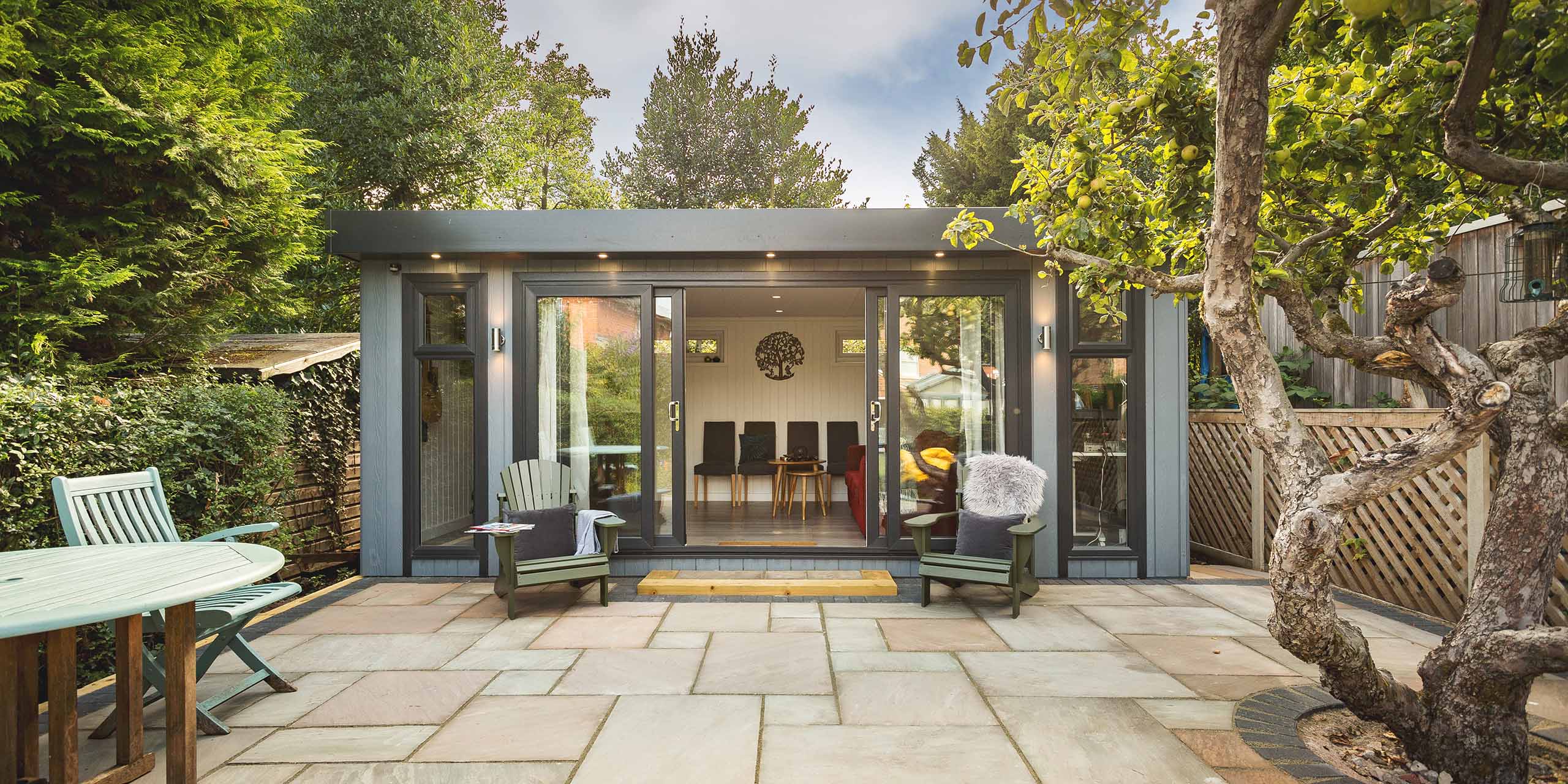
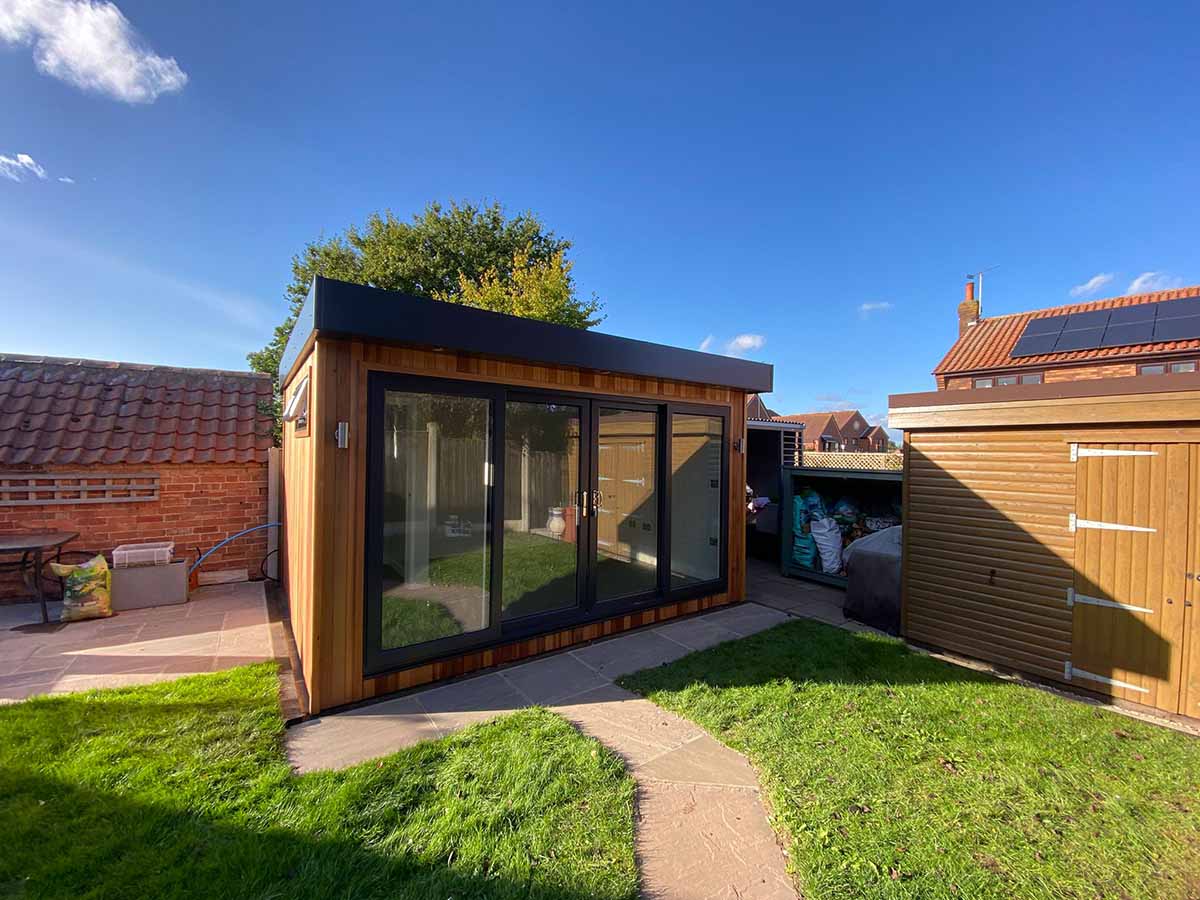
Consider whether the room will sit on a patio or terrace, or whether you’d like it surrounded by planting. A simple border of shrubs, grasses and perennials can soften edges and help the building feel established. You might want a small deck or paved area for a pair of chairs outside the doors, or a path that draws you naturally from the house to the entrance. Details like steps, thresholds and external lighting all play a part in how comfortable and inviting the garden room feels throughout the year.
Access is another important practical element. During our site survey we look carefully at how materials and panels will be brought into the garden, whether the ground needs any preparation, and what kind of base will be most suitable. It’s also worth thinking about day-to-day access for you: for example, whether you need level access for mobility reasons, or wide doors for moving bulky gym equipment or stock in and out.
How Flexible Should I Make My Garden Room Design?
A garden room is a long-term investment, and the most successful designs build in a degree of flexibility for the future. Your life today may revolve around home working, teenage children or growing a small business, but those circumstances will evolve.
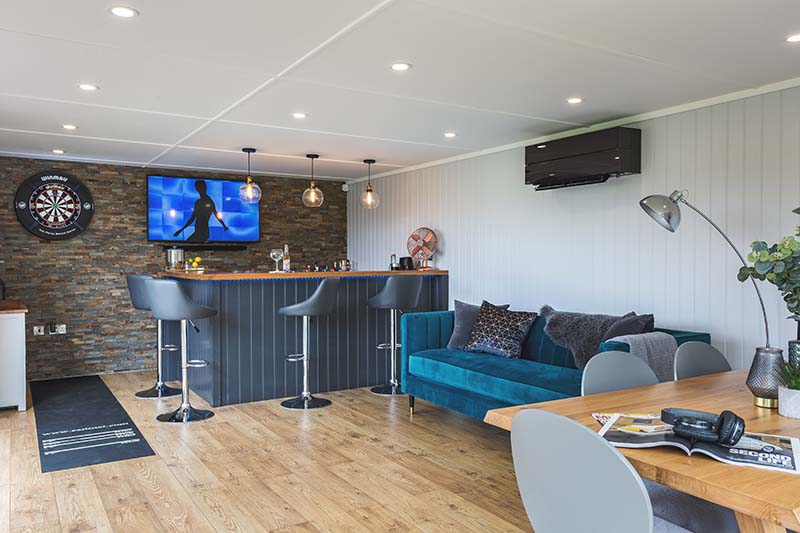
You might, for instance, need an annexe-style space over the next few years, with a bathroom and generous living area for a relative or older child. Once that season of life has passed, the same building could become a garden bar, hobby room or peaceful retreat. A room that starts life as a dedicated office might later serve as a home gym or craft studio. Because our buildings are fully insulated, robustly constructed and backed by a 10-year guarantee, they are created with this kind of long-term, multi-phase use in mind.
When planning your garden room, it’s good to ask yourself how your needs could change. Is it worth slightly increasing the size now to give future flexibility? Would adding plumbing now, even if the bathroom is simple, save disruption later? Could a cupboard or secondary zone make the room more adaptable in the future? These conversations are ones we regularly have with clients and they often lead to small design decisions that have a big impact over the lifetime of the building.
How Country Garden Rooms Helps You Choose the Right Design
Designing a garden room doesn’t have to feel overwhelming. At Country Garden Rooms, we’ve guided many homeowners through this process from first idea right through to the final coat of paint and our approach is very much collaborative.
We start by listening: understanding how you live, what you need more space for, and what your garden is like. A visit to our Taunton show site gives you the chance to experience the quality of our buildings in person, see different cladding and interior options and ask as many questions as you like. From there, we move into the 3D design stage, where ideas become tangible. You can see how the garden room will sit in your garden, how the internal layout will work and what the finished space will feel like.
Throughout, we provide honest guidance on practical matters such as planning permission, building regulations, access and groundworks. Our installation team then handles the full build, typically completed in a matter of days, with minimal disruption. Every building is fully insulated, finished internally and externally and covered by our 10-year guarantee.